Key Takeaways
- Your cover letter and CV should tell the same story, just in different formats.
- Use identical keywords from the job posting in both documents to beat ATS systems.
- Match your tone – formal CV means formal cover letter, creative CV allows personality.
- Never contradict your CV or introduce completely new information in your cover letter.
- Reference specific CV achievements in your cover letter for deeper context.
Ready to streamline the process? Paste your LinkedIn profile link – build ATS CV in 5 minutes with Linked CV Builder.

Look, I've seen people spend hours crafting the perfect CV only to slap together a generic cover letter in ten minutes. And then they wonder why they're not getting callbacks.
Here's the thing. Your cover letter isn't some annoying formality HR invented to waste your time. It's the narrative thread that ties your CV together. When done right, these two documents work like a one-two punch that gets you in the door.
Why Matching Actually Matters
Most applicants don't realize their CV and cover letter are being read by a robot first. ATS (Applicant Tracking Systems) scan both documents for keywords and consistency. If your CV says "project management" but your cover letter talks about "team coordination" – you just confused the algorithm. Maybe it still ranks you. Maybe it doesn't.
But here's what really gets me: even if you pass the ATS, a human will eventually read both. And humans notice inconsistencies faster than you'd think. I've talked to recruiters who've tossed applications because the cover letter mentioned skills that weren't on the CV. It makes them question everything.
Start With Your Tailored CV (Not the Other Way Around)
Big mistake people make? Writing the cover letter first. Don't.
Your CV is your foundation. Once you've tailored it for a specific job – highlighting relevant experience, matching keywords, reorganizing sections – then you write the cover letter. The cover letter expands on what's already there. It doesn't introduce random new achievements or skills that somehow didn't make the CV cut.
Think of it this way: your CV is the facts, your cover letter is the story behind those facts.
The Keyword Game (Yes, It's Tedious)
Pull up the job posting. Grab a highlighter or just copy-paste it into a doc. Circle every skill, qualification, and buzzword they mention.
Now look at your tailored CV. You should've already incorporated these terms naturally. Your cover letter needs to hit the same keywords, but... and this is important... you can't just list them robotically.
Bad example: "I have experience in data analysis, SQL, Python, and stakeholder management."
Better: "When I led the quarterly reporting project, I used SQL and Python to analyze customer behavior patterns – then presented those insights to C-level stakeholders who actually implemented my recommendations."
See the difference? Same keywords. One sounds human.
Match Your Tone (This Is Where People Fumble)
If you've written a clean, professional CV with formal language and bullet points, your cover letter can't suddenly sound like you're texting your best friend. The vibe has to match.
Corporate finance role? Keep both documents polished and buttoned-up. Startup marketing position? You can inject more personality into both. Creative agency? Your CV probably already has some flair – let your cover letter showcase that too.
I'm not saying be fake. I'm saying be consistent. If your CV presents you as detail-oriented and methodical, don't write a cover letter that's scattered and overly casual. Mixed signals kill trust.
Reference Specific CV Achievements
Here's a move that works stupidly well: pick 2-3 bullet points from your CV and expand on them in your cover letter.
Your CV says: "Increased customer retention by 28% through implementation of new onboarding process"
Your cover letter explains: "The 28% retention increase on my CV didn't happen by accident. I spent three months interviewing churned customers, identified friction points in our onboarding, and redesigned the entire first-week experience. It was messy, honestly – lots of pushback from the old guard – but seeing those retention numbers climb made every difficult conversation worth it."
Now the recruiter has context. Now they understand not just what you did, but how you think.
Don't Contradict Yourself (Seriously)
This sounds obvious but happens more than you'd think.
CV says you managed a team of 5. Cover letter mentions your "small team of 8-10 people." Which is it?
CV lists employment at Company X from 2021-2023. Cover letter references "my four years at Company X." The math doesn't math.
These aren't just typos. They're red flags that make recruiters think you're either careless or lying. Proofread both documents together. Have someone else read them. Catch these before you hit send.
The Format Connection
Your documents should look like they came from the same person. Use the same:
- Header design (name, contact info styled the same way).
- Font family and size.
- Color scheme if you're using any.
- Overall aesthetic.
I've seen cover letters in Times New Roman paired with CVs in modern sans-serif fonts. It's jarring. Small detail, but these small details add up to an impression. Professional and cohesive? Or thrown together last minute?
Address the Gaps, But Only Once
Maybe you have an employment gap. Or you're changing careers. Or you're relocating.
Pick ONE document to address this. Usually the cover letter, because it allows for explanation. Your CV should present your experience confidently without defensive explanations.
Don't rehash the same explanation in both places. It makes you seem insecure or like you're over-explaining. State it once, clearly, then move on to why you're qualified.
Leverage AI Tools (But Keep It Real)
I'll be honest – manually tailoring both a CV and cover letter for every application is exhausting. It's why people give up and send generic versions instead.
This is where tools like Linked CV Builder actually make sense. You paste a LinkedIn profile, paste the job URL, and it generates both a tailored CV and matching cover letter. Same keywords, consistent tone, proper alignment. Takes about five minutes instead of an hour.
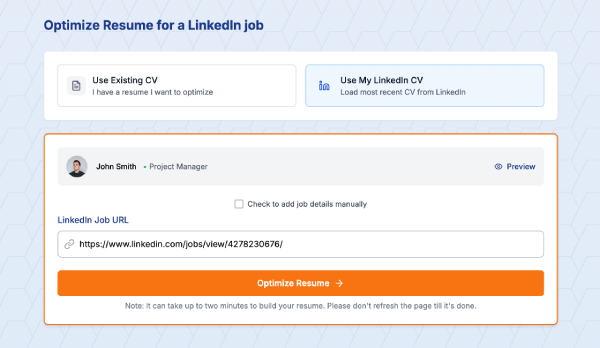
The AI handles the tedious keyword matching and formatting consistency. You handle making it sound authentically you. Edit the output, add personal touches, make sure it doesn't sound like a robot wrote it. Because the goal isn't to automate yourself out of the process – it's to automate the boring parts so you can focus on the storytelling.
The Structure That Actually Works
Here's a loose framework that keeps your cover letter aligned with your CV:
Paragraph 1: Why this specific role at this specific company excites you. Reference something from your research (not your CV).
Paragraph 2: Your most relevant CV achievement expanded with context. Tell the story behind the bullet point.
Paragraph 3: Second relevant achievement or skill from your CV, explained with more depth.
Paragraph 4: How you'll add value in THIS role specifically. Connect your past (from CV) to their future needs.
Closing: Brief, confident, professional. No begging.
That's it. Three to four paragraphs. Half a page, maybe three-quarters. Anything longer and you're waffling.
Test the Consistency
Before you submit, do this quick check:
- Print or view both documents side by side.
- Verify dates match exactly.
- Confirm job titles are identical.
- Check that skills mentioned in the cover letter appear in the CV.
- Make sure the tone feels consistent.
- Read them out loud (I know, it's weird, but you'll catch awkward phrasing).
Takes five minutes. Saves you from embarrassing inconsistencies.
The Real Talk Section
Let's be brutally honest for a second. Most cover letters are terrible. Most CVs are generic. And most people applying for the same job as you are sending mismatched documents that don't pass ATS screening anyway.
This is your advantage.
By actually taking the time to ensure your cover letter and CV work together – same keywords, consistent story, matching tone – you're already in the top 20% of applicants. Add in proper tailoring for each specific job? Top 10% easily.
The job market is competitive, sure. But it's not competitive with thoughtful, consistent, well-crafted applications. Those are rare. Be rare.
When to Break the Rules
Sometimes you need to mention something in your cover letter that's not on your CV. Maybe it's a personal connection to the company mission. Maybe it's a side project that's relevant but didn't fit the CV format. Maybe it's your reason for relocating.
That's fine. Just make sure it complements your CV rather than contradicting it. Your cover letter can add color and context – it just can't introduce doubt or confusion.
Final Thoughts
Your cover letter and CV are a package deal. They should reinforce each other, not compete. When a recruiter finishes reading both, they should have a clear, consistent understanding of who you are and what you bring to the table.
Is it more work than sending the same documents to every job? Yeah. Is it worth it? Absolutely. Because landing one great job that's actually right for you beats sending 100 generic applications into the void.
Make your documents work together. Make them tell the same story. Make them impossible to ignore.
Want to nail both documents without spending hours on each application? Paste your LinkedIn profile link – build ATS CV in 5 minutes with Linked CV Builder.
Written by Di Reshtei