Key Takeaways
- Senior professionals with 10+ years experience can justify two pages.
- Second page needs to earn its space (not just padding).
- ATS systems don't care about page count – they care about relevance.
- Wrong two-pager hurts more than a tight one-pager.
- Paste your LinkedIn profile link – build ATS CV in 5 minutes with Linked CV Builder.
Paste your LinkedIn profile link – build ATS CV in 5 minutes with Linked CV Builder.

Look, the whole one-page vs two-page debate is exhausting. Everyone's got an opinion and most of them are wrong.
Here's what I think after looking at hundreds of senior-level CVs: if you're applying for director-level positions or above, cramming everything into one page makes you look junior. Like you're still playing by entry-level rules.
But – and this is huge – a bad two-pager is worse than a good one-pager. Way worse.
When You Actually Need Two Pages
You've been working for 15 years. Three companies, maybe four. Led teams, shipped products, made actual business impact. Your achievements have numbers attached (revenue, growth percentages, team sizes). You've got technical depth AND leadership experience.
That's when two pages makes sense.
Not because you can fill two pages. Because you should.
The hiring manager for a VP role expects substance. They want to see the arc of your career... how you moved from doing the work to leading the work to shaping strategy. One page doesn't give you enough room to tell that story properly.
When You Definitely Don't
You're stretching. Adding every minor project. Listing technologies you touched once in 2019. Including that "References available upon request" line (stop doing this, by the way).
Or you're a mid-level person who thinks more pages = more impressive. It doesn't work that way.
I've seen engineers with five years experience submit two-page CVs where the second page is just... certifications and a lengthy "About Me" section. The recruiter spent maybe three seconds on page two before closing the PDF.
The rule isn't about years of experience, honestly. It's about substance per line. If most bullets on your CV are one generic sentence with no metrics, you don't have two pages of material yet.
What Goes On Page Two?
This is where people mess up. They treat page two like a dumping ground.
Page one should have your strongest, most recent, most relevant stuff. Obviously. Current or last role, key achievements, the skills that match the job posting.
Page two is for depth and breadth. Earlier career roles (condensed), additional technical skills, notable projects that didn't fit on page one, maybe education if you've got relevant credentials.
But here's the thing – page two still needs to be scannable. If someone flips to it, they should find information quickly. Not paragraphs. Not dense blocks of text that require studying.
Think of page two as "additional evidence" not "everything else I couldn't fit."
Some senior folks put their strategic achievements on page two – board positions, advisory roles, speaking engagements, publications. That works if those things matter for the role. For a Chief Technology Officer position? Maybe. For a Senior Engineering Manager role? Probably not.
The Format That Actually Works
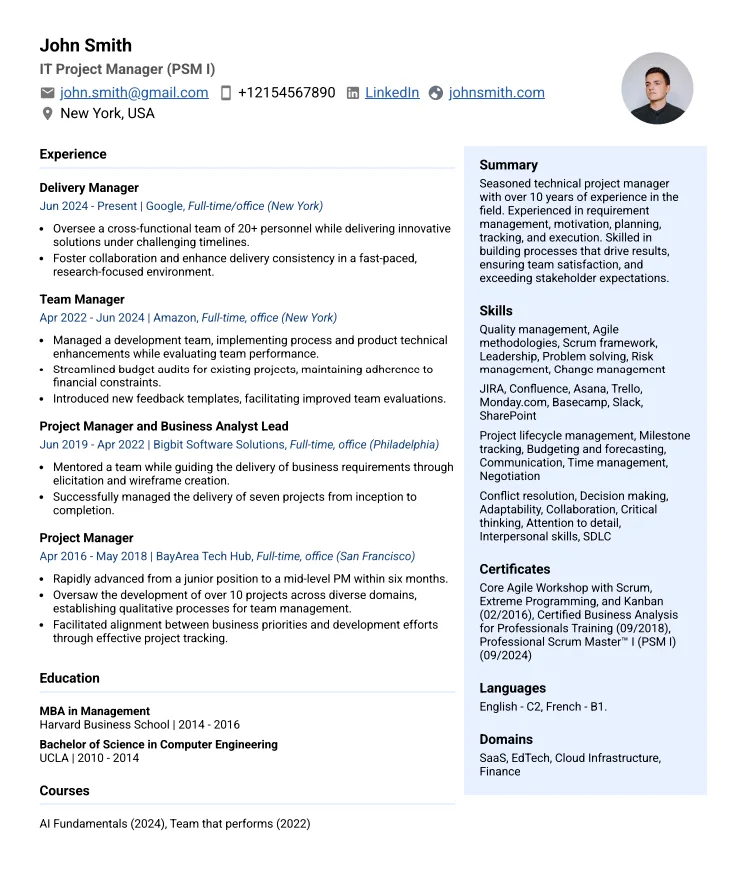
Both pages need headers with your name and contact info. Not full headers – just name and LinkedIn URL is fine. You'd be surprised how many CVs get split up during the hiring process.
Page breaks matter more than you'd think. Don't let a job title sit lonely at the bottom of page one with all the details on page two. Keep role descriptions together.
Use the same template design on both pages. Same fonts, same spacing, same bullet style. I've seen CVs where page two suddenly switches to a different format and it looks sloppy. Unpolished.
And for the love of everything, don't make page two noticeably emptier than page one. If you're only filling half of page two, you don't have two pages of content. Cut something from page one, or cut page two entirely.
The ATS Reality Check
ATS systems parse both pages the same way. They're looking for keywords, job titles, skills, and dates... page numbers mean nothing to the algorithm.
So the whole "recruiters only look at page one" thing? Half true. Recruiters definitely spend more time on page one. But if your CV makes it past ATS and looks relevant, they'll glance at page two.
The trick is making both pages ATS-friendly. No tables, no text boxes, no weird formatting. Linked CV Builder handles this automatically – the template is built to parse cleanly through any ATS system while still looking good to humans.
What kills two-page CVs in ATS isn't the length. It's poor keyword optimization spread too thin. If your relevant skills are buried on page two under a wall of less relevant experience, the ATS might score you lower.
Front-load relevance. Always.
Common Two-Page Mistakes
Mistake one: Treating page count as an achievement. I've reviewed CVs from senior leaders that were three, sometimes four pages long. Every single project from their entire career. Every technology they've ever used. Nobody's reading all that.
Mistake two: Making page one "summary heavy" with a giant profile section, then putting actual job history on page two. Backwards. Your work speaks louder than your summary.
Mistake three: Inconsistent detail levels. Page one has rich, quantified bullets with context. Page two suddenly becomes bare-bones lists. It looks like you ran out of energy halfway through.
Mistake four: Ignoring the job description. Your two-pager needs to be tailored. The content you choose for both pages should connect to what they're actually hiring for.
How to Decide
Ask yourself: if someone only reads page one, do they get enough information to call me for an interview?
If yes, page two is bonus material that adds credibility and depth.
If no, you've structured it wrong. The most critical information needs to be on page one.
Another test – print your CV and hold it at arm's length. Does page two look as "full" and intentional as page one? Or does it look like an afterthought?
Maybe the easiest test is this: would removing page two make your CV weaker or just shorter? If it'd be weaker, keep it. If it'd just be shorter... you probably don't need two pages.
The LinkedIn Profile Connection
Here's something most people miss – your CV should complement your LinkedIn, not duplicate it word-for-word.
LinkedIn can be as long as it needs to be. You can include every role, every project, endorsements, recommendations, the full story. Your CV needs to be the highlight reel.
For senior roles, I'd argue your LinkedIn should actually be more detailed than your CV. Because when recruiters look you up after reading your CV (and they will), they want to see depth that the CV couldn't fit.
Linked CV Builder pulls from your LinkedIn profile intelligently. It doesn't just copy-paste everything. It selects the most relevant experiences based on the job you're targeting and formats them properly. Then you decide – do I need one page or two?
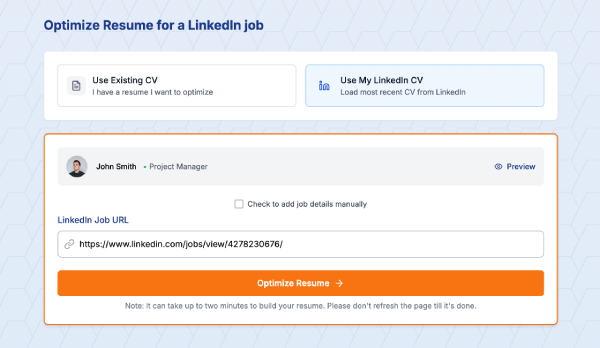
The AI handles the heavy lifting of matching your background to the role requirements. You focus on whether the output needs that second page or not.
Real Talk About Senior Hiring
Directors, VPs, C-suite folks – they're evaluating you differently than junior candidates. They want to see leadership arc, strategic thinking, business impact.
A one-page CV can show that, sure. But it's compressed. Almost too tight. With two pages, you can show progression. Early career technical depth, mid-career people leadership, late career strategic influence.
That narrative matters at senior levels.
But only if both pages contribute to that narrative. If page two is random noise, cut it.
I think the resistance to two-page CVs comes from outdated advice that made sense in like 2005. Now? Most senior roles expect it. Just make it count.
Quick Action Plan
If you're wondering whether you need two pages:
- Start with everything on paper (or screen). All your roles, all your achievements. Don't hold back.
- Now cut 40%. Be ruthless. Remove anything that doesn't directly support the job you're applying for.
- What's left – does it fit on one page without shrinking fonts below 10pt or margins below 0.5 inches? If yes, stick with one page. If no, consider two pages.
- Format both pages identically. Front-load your strongest material on page one. Make page two valuable, not just "extra."
- Test it. Send it to someone in a senior role and ask: does page two add value or dilution?
- Then adjust.
And honestly? If you're still unsure, use a tool that handles the formatting and ATS optimization for you. Linked CV Builder converts your LinkedIn profile into a properly formatted CV – one or two pages depending on your experience level and the target role – in about five minutes.
You paste your LinkedIn profile link, paste the job posting, and it generates an ATS-optimized CV that's actually readable by humans. Saves you from agonizing over page breaks and formatting consistency.
The debate about one vs two pages matters less than having a CV that's relevant, scannable, and properly formatted. Get that right first. Page count is secondary.
Written by Di Reshtei